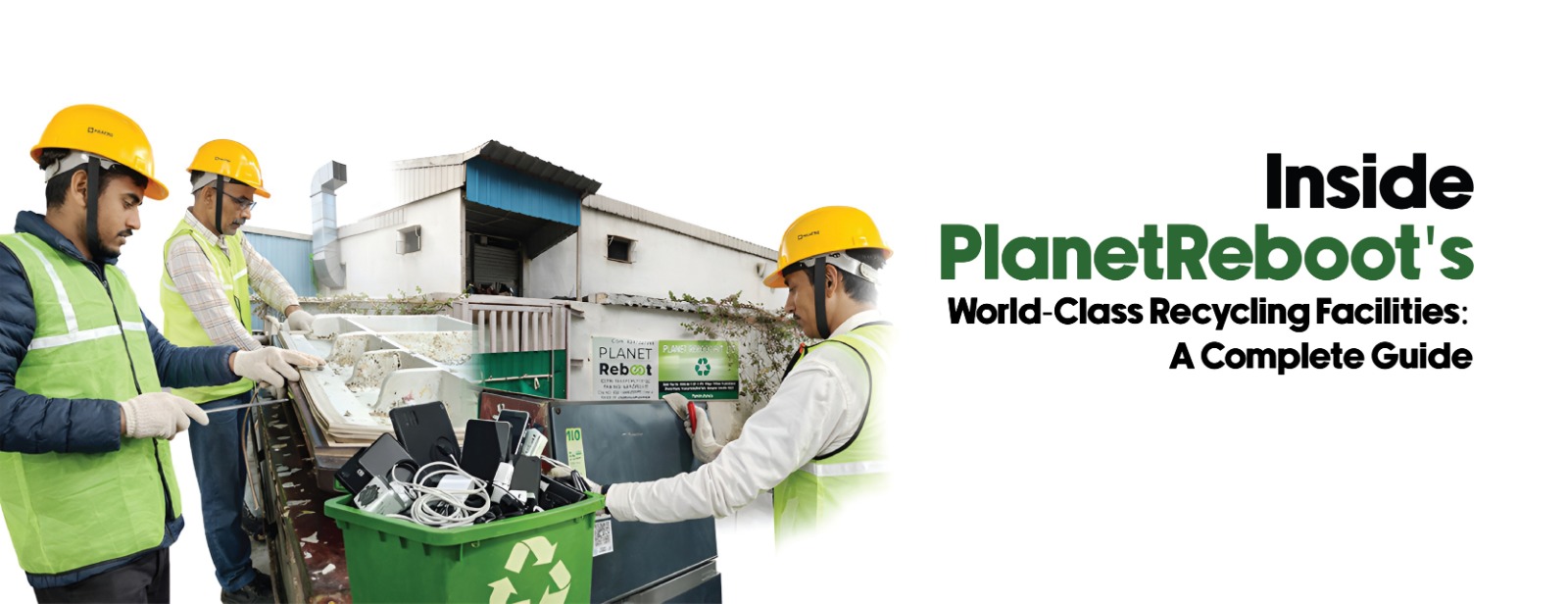
Inside PlanetReboot’s World-Class Recycling Facilities: A Complete Guide

Inside PlanetReboot’s World-Class Recycling Facilities: A Complete Guide

India generates over 3.2 million metric tonnes of electronic waste annually — and the number keeps rising. Amid this growing crisis, PlanetReboot has emerged as one of India's most trusted and technologically advanced e-waste management companies, offering end-to-end recycling solutions that are safe, certified, and environmentally responsible.

At the heart of PlanetReboot's operations lie five specialized recycling facilities — each engineered to handle a distinct category of electronic waste with maximum efficiency and zero environmental compromise. From recovering precious metals in circuit boards to treating industrial effluents, PlanetReboot's infrastructure represents the gold standard in responsible e-waste recycling in India.

1. PCB Recycling Plant — Where E-Waste Recycling Begins with Circuit Boards

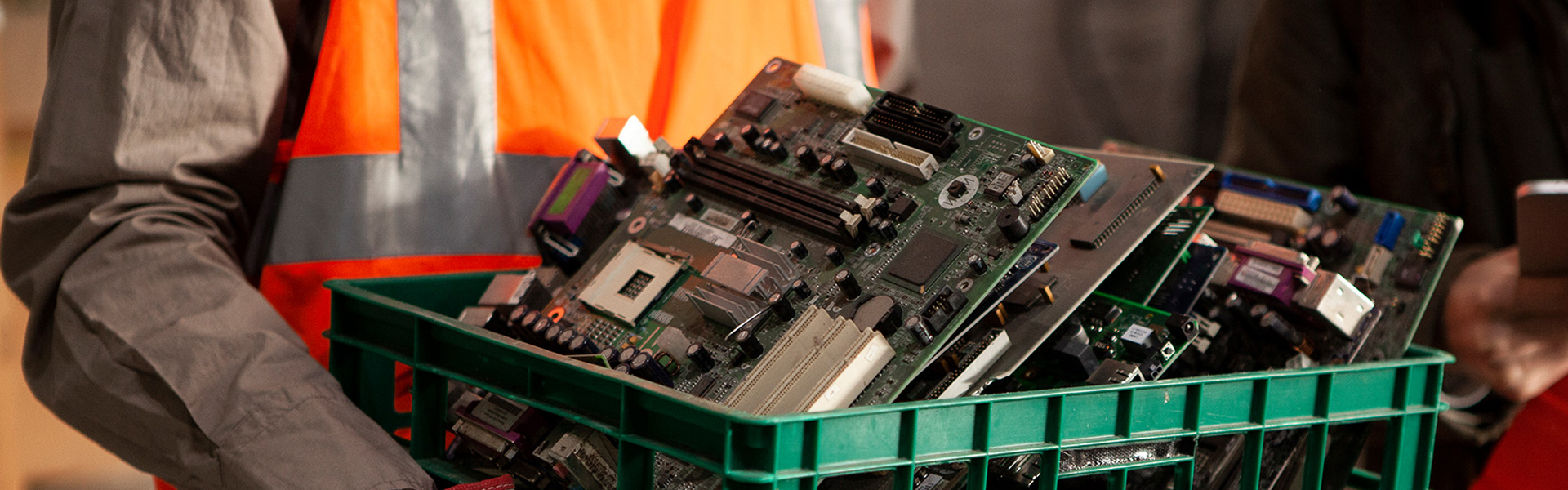
Printed Circuit Boards (PCBs) are among the most complex and hazardous components in any electronic device. They contain a mix of valuable metals — gold, silver, copper, and palladium — alongside toxic substances like lead, mercury, and brominated flame retardants. Improper disposal of PCBs leads to severe soil and groundwater contamination.

How PlanetReboot's PCB Recycling Plant Works

PlanetReboot's PCB recycling plant achieves a recovery rate that maximises material value while ensuring zero hazardous landfill output — a critical milestone in India's push towards a circular economy for electronics.

2. Wire Recycling Plant — Responsible E-Waste Recycling for Copper Recovery

Cables and wires form a significant portion of electronic scrap. They carry valuable copper cores encased in PVC or rubber insulation that, if burned informally, releases toxic dioxins and furans. PlanetReboot's Wire Recycling Plant offers a safe, mechanical alternative that recovers high-grade copper without any open burning.

How the Wire Recycling Plant Operates

  • Collection & Segregation: Wires are collected from IT companies, manufacturers, and demolition sites and segregated by gauge and insulation type.
  • Wire Stripping & Granulation: Automated granulators strip and separate copper from insulation at high throughput without heat or chemical processes.
  • Air Separation & Density Sorting: Air tables and vibration separators sort copper granules from PVC fragments with over 99% purity.
  • Reintegration into Supply Chain: Recovered copper is baled and supplied directly to smelters and copper product manufacturers.

By mechanically processing wires instead of burning them, PlanetReboot prevents tonnes of toxic emissions annually while ensuring that recovered copper re-enters the manufacturing value chain cleanly and efficiently.

3. E-Waste Recycling Plant — End-to-End Electronics Processing

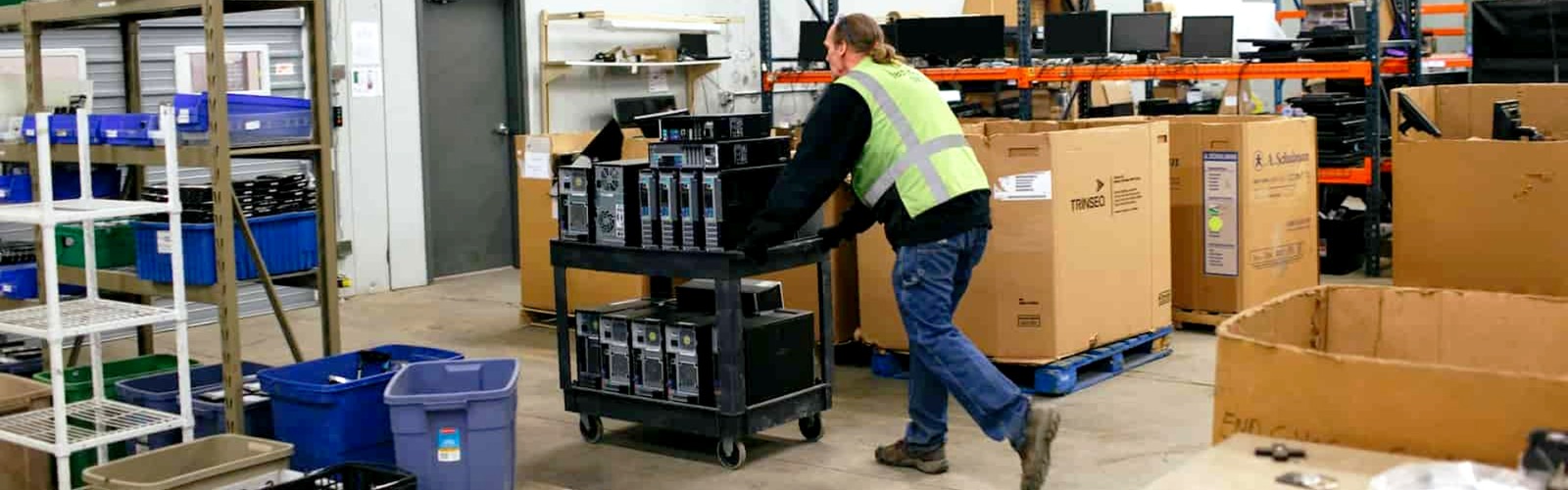
This is the flagship facility at PlanetReboot — a comprehensive e-waste recycling plant that handles the full spectrum of consumer and industrial electronics: laptops, desktops, televisions, mobile phones, refrigerators, air conditioners, and industrial equipment. It is fully compliant with the E-Waste (Management) Rules, 2022.

End-to-End Processing Workflow

  • Intake & Data Security: Devices are logged, audited, and subjected to certified data destruction — crucial for corporate clients handling sensitive information.
  • Manual Dismantling: Trained technicians disassemble devices to recover reusable components such as RAM, hard drives, and display modules.
  • Material Segregation: Components are streamed into dedicated channels — PCBs to the PCB plant, wires to the wire plant, plastics to the plastic section, and metals to smelters.
  • Certified Reporting: Every client receives an e-waste recycling certificate, supporting their EPR (Extended Producer Responsibility) compliance documentation.

PlanetReboot's e-waste recycling plant is equipped to process thousands of tonnes per year, making it one of the highest-capacity authorised e-waste recyclers in the region.

4. ETP Plant (Effluent Treatment Plant) — Protecting Water, Protecting Life

Recycling processes — especially hydrometallurgical extraction and PCB processing — generate wastewater laden with heavy metals, acids, and chemical residues. Without proper treatment, this effluent poses severe risks to groundwater and aquatic ecosystems. PlanetReboot's in-house Effluent Treatment Plant (ETP) ensures that every drop of industrial wastewater is treated before it leaves the facility.

Multi-Stage Effluent Treatment Process

  • Primary Treatment: Screening and sedimentation remove large solids and suspended particles from incoming effluent streams.
  • Chemical Treatment: pH neutralisation and coagulation-flocculation precipitate heavy metals including lead, cadmium, and chromium out of solution.
  • Secondary/Biological Treatment: Biological oxidation processes break down organic pollutants and reduce BOD/COD levels to permissible limits.
  • Tertiary Polishing & Monitoring: Treated water undergoes final filtration and is continuously tested for compliance with SPCB discharge standards before safe release or reuse.

The ETP plant is a testament to PlanetReboot's zero-compromise approach to environmental stewardship — ensuring that its recycling operations never come at the cost of ecological damage.

5. Plastic Section — Closing the Loop on Polymer Waste

Electronics contain significant quantities of high-grade engineering plastics — ABS (Acrylonitrile Butadiene Styrene), polycarbonate, HIPS, and more. These polymers have high calorific value and commercial reusability, yet they are routinely landfilled or informally incinerated. PlanetReboot's Plastic Section captures and recycles these materials systematically.

How the Plastic Section Adds Value

  • Identification & Sorting: Plastics are identified by resin type using density tests and NIR (Near-Infrared) technology, then sorted accordingly.
  • Washing & Cleaning: Contaminants, labels, and residues are removed through industrial washing lines to improve output purity.
  • Shredding & Pelletising: Cleaned plastics are shredded and extruded into pellets or granules — ready for re-use in injection moulding or other manufacturing processes.
  • Responsible Offtake: Recovered plastic is supplied to certified downstream recyclers and manufacturers, diverting it permanently from landfill.

By treating plastics as a resource rather than waste, PlanetReboot contributes directly to India's national targets for plastic waste management and extended producer responsibility (EPR) compliance.

Why PlanetReboot is India's Most Trusted E-Waste Recycling Company

Trust in the e-waste industry is hard-won. It requires regulatory compliance, transparent processes, certified data security, and an unwavering commitment to environmental responsibility. PlanetReboot earns that trust through:

  • EPR Compliance Support: Helping brands, manufacturers, and importers meet their Extended Producer Responsibility obligations seamlessly.
  • Certified Data Destruction: ISO-grade data sanitisation for corporate and government clients with full audit trails.
  • Zero-Landfill Policy: Every material stream is either recovered, reused, or safely processed — nothing goes to landfill.
  • Transparent Reporting: Clients receive real-time tracking and detailed recycling certificates for every consignment processed.

Conclusion: Building a Greener Future, One Device at a Time

PlanetReboot's five specialised facilities — the PCB Recycling Plant, Wire Recycling Plant, E-Waste Recycling Plant, ETP Plant, and Plastic Section — are not just operational units. They are the pillars of a vision: an India where electronic waste is no longer a liability, but a resource.

Whether you're a corporate looking to responsibly retire IT assets, a manufacturer seeking EPR compliance, or an institution committed to sustainability, PlanetReboot offers the expertise, infrastructure, and integrity to get the job done — right.

Partner with PlanetReboot today. Because responsible recycling isn't just good practice — it's the only way forward.
ESG Trends to Watch in 2026: What Every Indian Institution Must Know About Sustainability & E-Waste Compliance

Introduction

Sustainability is no longer a boardroom buzzword in India — It is a legal obligation, a business imperative, and increasingly, a measure of institutional credibility. As 2026 unfolds, ESG compliance for Indian institutions is reshaping how businesses, hospitals, universities, government bodies, and corporates are expected to operate, report, and be held accountable.

For institutions generating e-waste — which includes virtually every organisation that uses computers, servers, printers, or any electronic equipment — 2026 brings sharper compliance requirements, stricter penalties, and a growing expectation to demonstrate responsible disposal. This blog breaks down the key ESG trends shaping India in 2026 and explains exactly what they mean for your institution.

Trend 1: BRSR Reporting in 2026: Why ESG Compliance for Indian Institutions Is Now Mandatory & Audited

The Securities and Exchange Board of India (SEBI) has made Business Responsibility and Sustainability Reporting (BRSR) mandatory for the top 1,000 listed companies by market capitalisation for FY 2025–26. What is new in 2026 is that self-declared ESG metrics are no longer enough. For ESG compliance, Indian institutions and the top 250 companies must now obtain third-party reasonable assurance on their BRSR Core indicators — meaning your sustainability data is subject to audit-level scrutiny.

What this means for your institution:

  • Your ESG disclosures must be backed by verified, measurable data — not estimates or narratives
  • Value chain disclosures are expanding, meaning suppliers and partners are also under the lens
  • ESG rating agencies can now withdraw ratings if BRSR filings are missing or incomplete
  • Non-listed institutions — hospitals, universities, NGOs — are not yet mandated but are increasingly expected to align voluntarily to attract funding, partnerships, and government contracts

Trend 2: Extended Producer Responsibility (EPR) & E-Waste: A Key ESG Compliance Requirement for Indian Institutions in 2026

Under India's E-Waste (Management) Rules, 2022, every bulk consumer of electrical and electronic equipment — including corporates, hospitals, educational institutions, and government bodies — is legally required to ensure their e-waste is handed over only. This is not a recommendation. It is the law.

Key EPR compliance requirements for institutions in 2026:

  • E-waste generated must be handed over exclusively to a producer, recycler, or refurbisher
  • EPR recycling targets have increased — institutions generating e-waste must ensure 70% of their electronic waste is recycled through authorised channels in FY 2025–26 and 2026–27
  • Annual returns and documentation of e-waste disposal must be filed and maintained
  • Penalties for non-compliance range from ₹1 lakh to ₹1 crore per violation under the Environment Protection Act
  • Repeat or severe violations can lead to suspension of operations and legal prosecution

Simply put: throwing old laptops in a storeroom, selling them to an informal kabadiwala, or dumping them in regular waste is not just irresponsible — it is illegal and carries serious financial and legal consequences.

Trend 3: The 'E' in ESG Is Getting Stricter — Circular Economy Is Now an ESG Compliance Priority for Indian Institutions

In 2026, the environmental pillar of ESG has moved from carbon footprint discussions to active circular economy practices. ESG compliance for Indian institutions now means being evaluated on how they minimise waste, extend product lifecycles, and ensure responsible end-of-life disposal of assets — especially electronic equipment.

Key circular economy actions institutions should take:

  • Conduct a digital asset audit — know exactly how many devices you own, their age, and their end-of-life status
  • Partner with a recycler for structured bulk pickup and documented disposal
  • Refurbish and reuse devices internally where possible before disposing
  • Obtain EPR certificates as documented proof of compliant e-waste recycling
  • Include e-waste disposal records in your annual sustainability or CSR report

Trend 4: ESG Performance Now Affects Funding, Tenders & Investor Confidence

India's financial ecosystem is rapidly aligning ESG performance with capital allocation. The State Bank of India has introduced ESG-compliant lending policies, and global investors managing trillions of dollars are already favouring businesses with verified sustainability credentials. Assets under management in ESG-focused funds are projected to reach $33.9 trillion globally by 2026.

For Indian institutions, this translates to a practical reality: government tenders are increasingly factoring in environmental compliance, B2B buyers are demanding EPR certification as a procurement requirement, and institutions without documented sustainability practices risk being deprioritised by both lenders and partners.

Trend 5: Greenwashing Is Under the Scanner — Only Certified Actions Count

As ESG reporting becomes more widespread, regulators and stakeholders are cracking down on greenwashing — where organisations exaggerate or misrepresent their sustainability efforts. In 2026, ESG compliance for Indian institutions means claiming to be 'eco-friendly' or 'green' without verified documentation is no longer acceptable — it is a reputational and legal risk.

What certified, documented action looks like:

  • E-waste disposed through a with valid
  • Data destruction certificates for devices to ensure data security during disposal
  • Annual compliance reports filed with regulatory authorities
  • Transparent internal sustainability reporting with measurable outcomes — not vague claims

How PlanetReboot Helps Indian Institutions Stay ESG-Compliant & E-Waste Ready

At PlanetReboot, we understand that for most institutions, e-waste compliance is a complex and unfamiliar territory. Our role is to make it simple, safe, and fully documented — so your organisation meets every legal requirement while genuinely contributing to a cleaner India.

Here is what we do:

  • Bulk e-waste pickup directly from your premises — no logistics burden on your team
  • Authorised recycling with full chain-of-custody documentation
  • Issuance of EPR certificates as proof of compliance for audits and reporting
  • Data destruction ensuring complete data security before device disposal
  • Compliance reports that can be directly used in your disclosures
  • Awareness and guidance sessions for your internal teams on e-waste regulations

Conclusion:

ESG Is Not a Choice Anymore — It's a Responsibility

2026 marks a clear turning point for ESG in India. Regulations are tighter, enforcement is sharper, and institutional accountability is no longer limited to large corporations. If your organisation generates e-waste — and if you use any electronic device, you do — then responsible, certified disposal is now both a legal requirement and an ESG imperative.

India's bulk e-waste has a new address. And it's not a landfill. Give your e-waste the address it deserves — partner with PlanetReboot today.

How PlanetReboot Is Redefining Responsible E-Waste Management in India

Introduction: The E-Waste Crisis and India's Need for Responsible Recycling

India is the third-largest generator of e-waste in the world, producing over 3.23 million tonnes of electronic waste every year — yet e-waste management in India remains critically underdeveloped. Only about 10% of this waste is processed through formal, authorised recycling channels — the rest flows into unregulated hands, causing toxic contamination of soil, air, and groundwater. As corporations, institutions, and individuals upgrade their electronics at an unprecedented pace, the question of what happens to discarded devices has never been more urgent.

PlanetReboot is India's emerging leader in certified e-waste management — a government-authorised, platform that specialises in the safe collection, secure data destruction, and sustainable recycling of discarded electronics. From individual devices to large-scale corporate bulk disposal, PlanetReboot ensures that every piece of technology is handled responsibly, legally, and with full compliance documentation. It is not just a recycling company — it is a movement redefining what responsible e-waste management in India truly looks like.

PlanetReboot's Role in India's E-Waste Management Ecosystem

PlanetReboot operates at the intersection of environmental compliance, data security, and circular economy principles. Its role in India's e-waste ecosystem is multifaceted and far-reaching:

  • Authorised Recycler: Officially registered with the respective, PlanetReboot is one of India's most trusted government-authorised e-waste recyclers — ensuring every disposal follows the E-Waste (Management) Rules, 2016.
  • Bulk Corporate Disposal: PlanetReboot specialises in handling large volumes of obsolete electronics from IT parks, offices, educational institutions, banks, hospitals, and government bodies — complete with logistics management, compliance documentation, and certified destruction.
  • IT Asset Disposition (ITAD): End-of-life servers, computers, laptops, and peripherals are responsibly decommissioned under a managed chain of custody — from collection to certified recycling.
  • Secure Data Destruction: PlanetReboot provides industrial-grade data wiping, degaussing, and physical hard drive destruction services, ensuring that confidential business data is never compromised.
  • Battery and Cable Recycling: Most cables, chargers, and batteries end up in landfills causing toxic contamination. PlanetReboot offers dedicated collection and safe processing for these often-overlooked waste streams.
  • Pan-India Logistics Network: With a growing pickup network across major Indian cities, PlanetReboot makes responsible disposal accessible to businesses and individuals alike.

Sources of E-Waste Collection in India: What PlanetReboot Handles

PlanetReboot accepts a comprehensive range of electronic waste categories from corporate and institutional sources. The types of e-waste collected include:

  • End-of-Life Products (Back/Prexo): Electronics that have completed their usable lifecycle and require certified disposal — including returned, refurbished-grade, or pre-owned devices no longer fit for resale.
  • IT Scrap and ITAD: Decommissioned computers, laptops, servers, printers, and peripherals from IT departments and data centres.
  • Automobile Scrap: Electronic components and circuit boards from automotive applications including control units, sensors, and navigation systems.
  • Second-Sale Scrap: Products returned or cleared through secondary market channels that require responsible processing.
  • Plastic Scrap: Electronic housing, casings, and plastic components from dismantled devices requiring segregated, safe disposal.
  • Defective Items: Damaged or non-functional electronics from manufacturing, retail, and institutional use.
  • Mobile Phones and LED Devices: Discarded smartphones, feature phones, LED monitors, and lighting equipment — all of which contain recoverable precious metals including gold, silver, and copper.
  • Scrap from Hospitals and Medical Institutions: Obsolete medical electronic equipment and devices requiring CPCB-compliant disposal.


Trusted by India's Leading Brands: Corporate Partners of PlanetReboot

PlanetReboot's credibility as a trusted leader in e-waste management in India is reflected in the trust placed in it by some of the country's most recognised corporations across sectors. These organisations channel their end-of-life electronics, scrap, and defective items to PlanetReboot for safe, compliant, and certified recycling.

Retail and Consumer Electronics

Reliance, Flipkart, Croma, and Reliance Swipe trust PlanetReboot for responsible disposal of end-of-life products, prexo inventory, and scrap from their retail and logistics operations. H&M contributes plastic scrap and discarded electronic accessories for certified processing.

Healthcare and Medical Institutions

Fortis Healthcare and Medanta — two of India's leading hospital networks — partner with PlanetReboot for the safe disposal of defective medical devices, IT scrap, and obsolete electronic equipment from their facilities, in full compliance with environmental and data privacy regulations.

Technology and Automotive

Rosmerta Technologies Limited and Bajaj contribute automobile scrap and electronic components from their operations. Havells, one of India's leading electrical equipment manufacturers, channels its IT and electronic scrap through PlanetReboot. Terix Computer Service provides IT asset disposal and scrap from its servicing operations, ensuring complete data security through PlanetReboot's certified ITAD process.

The diversity of these partnerships — spanning retail, healthcare, technology, FMCG, and automotive sectors — reflects PlanetReboot's unmatched capability in e-waste management in India, handling varied waste streams at scale with the documentation and compliance required by each industry.

PlanetReboot and NGOs: Building a Grassroots E-Waste Collection Network

One of PlanetReboot's most impactful and distinctive contributions is its active collaboration with NGOs and community organisations. Recognising that e-waste management in India is not only a corporate challenge but a deeply community-level one, PlanetReboot partners with non-governmental organisations to:

  • Organise community e-waste collection drives in residential areas, schools, colleges, and public institutions where households can safely deposit discarded electronics.
  • Conduct e-waste awareness programmes educating citizens — especially in tier-2 cities and underserved communities — about the hazards of improper disposal and the importance of authorised recycling.
  • Extend bulk collection services to NGO-run schools, vocational training centres, and social enterprises that generate e-waste but may lack access to formal disposal channels.
  • Support the formalisation of informal e-waste collectors by integrating them into responsible collection networks, providing livelihoods while ensuring waste reaches certified recycling facilities.
  • Contribute to CSR and ESG goals for corporates by channelling their e-waste contributions through NGO-linked drives, creating measurable social and environmental impact.

This NGO-linked model bridges the gap between institutional e-waste management and grassroots participation — making PlanetReboot not just a corporate recycler but a genuine partner in India's broader environmental mission.

Why PlanetReboot Is India's Most Trusted E-Waste Platform

In a sector where unregulated disposal is still rampant, PlanetReboot stands apart through a combination of authorisation, transparency, and accountability:

  • Government-Authorised: Registered with CPCB and SPCB — making every disposal legally compliant with India's E-Waste (Management) Rules.
  • Internationally recognised ensuring quality, environmental responsibility, and responsible recycling standards.
  • Compliance Documentation: Every client receives an official disposal or destruction certificate — essential for corporate compliance, ESG reporting, and regulatory audits.
  • Zero Data Risk:Verified data wiping, degaussing, and physical hard drive destruction guarantee that sensitive business information is never exposed.
  • Green Earth Partner: PlanetReboot has been recognised for its environmental stewardship in the Indian recycling ecosystem.

Conclusion: The Future of E-Waste Management Starts with Responsibility

India cannot afford to let its e-waste problem grow unchecked. With millions of tonnes of electronics reaching end-of-life every year, the need for authorised, scalable, and trustworthy recycling infrastructure has never been greater. PlanetReboot is answering that call — one device, one organisation, and one community at a time.

Whether you are a corporate looking to responsibly decommission IT assets, a hospital clearing outdated medical equipment, or a citizen with a drawer full of old phones — PlanetReboot offers a certified, convenient, and compliant path forward. Responsible e-waste disposal is no longer optional. With PlanetReboot, it has never been easier.


Schedule your e-waste pickup today at planetreboot.in — Authorised. Certified. Responsible.

E-Waste Management in India 2026: Your Ultimate Recycling Handbook

India's digital revolution has transformed how we live, work, and communicate. With over 600 million smartphone users and rapid technological adoption, we've become one of the world's largest consumers of electronics. However, this digital growth comes with a hidden cost: electronic waste, or e-waste.

In 2026, India generates approximately 3.2 million tons of e-waste annually, yet only 10% is recycled through authorized channels. The remaining 90% ends up in landfills or informal recycling sectors, where toxic materials leach into soil and water, causing severe environmental and health hazards.

This comprehensive guide will walk you through everything you need to know about e-waste recycling in India, empowering you to make responsible choices with your old electronics.

What is E-Waste?

E-waste, or electronic waste, refers to any discarded electrical or electronic device. This includes:

  • Communication devices: Smartphones, tablets, landline phones
  • Computing equipment: Laptops, desktops, keyboards, mice, printers
  • Display devices: TVs, monitors, LED screens
  • Small appliances: Toasters, kettles, electric irons, hair dryers
  • Accessories: Chargers, cables, headphones, power banks, batteries

Essentially, if it runs on electricity or batteries and you no longer need it, it qualifies as e-waste.

Why E-Waste Recycling Matters

Environmental Protection

A single smartphone contains hazardous materials including mercury, lead, cadmium, and arsenic. When improperly disposed of in landfills, these toxins leach into groundwater and soil, contaminating our environment for generations.

Consider this: one phone battery can contaminate 600,000 liters of water. With millions of devices discarded annually, the environmental impact is staggering.

Resource Recovery

Your old electronics aren't worthless—they're treasure troves of valuable materials. E-waste contains precious metals like gold, silver, copper, and palladium. In fact, one ton of e-waste contains more gold than 17 tons of gold ore.

Recycling one million phones can recover:

  • 35,000 pounds of copper
  • 772 pounds of silver
  • 75 pounds of gold
  • 33 pounds of palladium

Energy Conservation

Manufacturing electronics from recycled materials requires 95% less energy than producing them from virgin raw materials. Recycling one million laptops saves enough energy to power 3,500 homes for an entire year.

Health Safety

Informal e-waste recycling—where workers manually dismantle devices without safety equipment—exposes people to toxic fumes and hazardous materials. Supporting authorized recycling channels protects these vulnerable workers.

Understanding India's E-Waste Management Rules

India's E-Waste (Management) Rules, 2016 established the framework for responsible e-waste handling. Key provisions include:

Extended Producer Responsibility (EPR)

Manufacturers and importers of electronic goods must collect and recycle their products at end-of-life. Major brands like Apple, Samsung, and Dell operate collection programs under EPR obligations.

Consumer Responsibility

While producers bear primary responsibility, consumers must also:

  • Avoid disposing of e-waste in regular household trash
  • Return old devices to authorized collection centers
  • Use manufacturer take-back programs when available

Authorized Recyclers

Only facilities with proper authorization from State Pollution Control Boards can legally e-waste recycling in India. These facilities must follow strict environmental and safety protocols.

How to Prepare Your Devices for Recycling

Step 1: Back Up Your Data

Before recycling any device, back up important files, photos, and documents to cloud storage or an external drive. This ensures you don't lose precious memories or critical information.

Step 2: Sign Out of All Accounts

Log out of:

  • Email accounts
  • Social media profiles
  • Banking apps
  • Cloud storage services
  • Streaming platforms

This prevents unauthorized access after you've recycled the device.

Step 3: Remove SIM Cards and Memory Cards

Extract your SIM card, SD card, or any other removable storage. These often contain personal information and can be reused.

Step 4: Factory Reset

Perform a factory reset to erase all data from the device. This restores it to its original settings and removes your personal information.

Important: Factory reset alone isn't enough for complete data security.

Step 5: Use Data Wiping Software

For added security, especially for computers and phones containing sensitive information, use certified data wiping software. These programs overwrite your data multiple times, making it virtually impossible to recover.

Step 6: Verify with Certified Recyclers

Choose recyclers who provide certificates of data destruction. Reputable services like PlanetReboot offer guaranteed data security protocols compliant with IT Act regulations.

Where to Recycle E-Waste in India

Authorized Collection Centers

Government-approved collection centers operate in major cities across India. These facilities accept various types of e-waste and ensure proper recycling through authorized channels.

Manufacturer Take-Back Programs

Many electronics brands offer free take-back services:

  • Apple: Trade-in and recycling programs at Apple Stores
  • Samsung: E-waste collection drives and exchange offers
  • Dell: Mail-in and drop-off recycling services
  • HP: Planet Partners recycling program

E-Waste Recycling Companies

Professional e-waste management companies like PlanetReboot offer:

  • Free doorstep pickup for bulk and individual items
  • Certified data destruction with compliance certificates
  • Transparent recycling processes with material recovery reports
  • Corporate solutions for businesses managing IT asset disposal

E-Waste Collection Drives

Municipal corporations and NGOs regularly organize e-waste collection drives in residential areas, offices, and educational institutions. Stay informed about local initiatives through community notices.

The E-Waste Recycling Process

Understanding what happens to your device after recycling builds confidence in the process:

  1. Collection and Transportation

Devices are collected from various sources and transported to authorized recycling facilities in secure vehicles.

  1. Sorting and Categorization

Items are sorted by type (phones, laptops, cables, etc.) and condition. Devices that can be refurbished are separated for potential reuse.

  1. Data Destruction

All storage devices undergo certified data destruction processes, including degaussing (magnetic erasure) and physical shredding of hard drives.

  1. Manual Dismantling

Trained workers carefully dismantle devices to separate components: circuit boards, batteries, screens, casings, and cables.

  1. Material Separation

Advanced machinery separates materials:

  • Metals: Gold, silver, copper, aluminum extracted through chemical processes
  • Plastics: Sorted by type and sent for recycling
  • Glass: Cleaned and recycled
  • Hazardous materials: Batteries and toxic components handled separately
  1. Proper Disposal

Materials that cannot be recycled are disposed of according to environmental regulations, preventing soil and water contamination.

  1. Material Recovery

Recovered materials are processed and sold to manufacturers for use in new products, completing the circular economy loop.

Corporate E-Waste Management

Businesses face unique e-waste challenges due to:

  • Large volumes of outdated equipment
  • Strict data security requirements
  • Regulatory compliance obligations
  • IT asset lifecycle management

Best Practices for Businesses

Conduct regular IT audits: Track all electronic assets and plan for end-of-life disposal.

Develop a recycling policy: Establish clear procedures for retiring and recycling old equipment.

Partner with certified recyclers: Work with authorized facilities that provide compliance certificates and detailed recycling reports.

Train employees: Educate staff about proper e-waste handling and company recycling procedures.

Implement ITAD services: IT Asset Disposition (ITAD) services ensure secure data destruction and maximum value recovery from retired equipment.

Common E-Waste Recycling Mistakes to Avoid

  1. Throwing Electronics in Regular Trash

This is illegal in many areas and causes serious environmental harm. Always use designated e-waste recycling in India.

  1. Selling to Unverified Buyers

Informal recyclers (kabadiwalas) may not follow safe recycling practices and cannot guarantee data security.

  1. Hoarding Old Devices

That drawer full of old phones and chargers? It's preventing valuable materials from being recovered and reused.

  1. Incomplete Data Deletion

Selling or recycling devices without proper data wiping exposes you to identity theft and privacy violations.

  1. Mixing E-Waste with Other Waste

Batteries, in particular, should never be mixed with regular trash due to fire and contamination risks.

The Future of E-Waste in India

As technology advances and consumer electronics become more affordable, India's e-waste generation is projected to double by 2030. However, the landscape is changing:

Emerging Trends

  • Urban mining: Extracting valuable metals from e-waste becoming economically viable
  • Right to repair movement: Extending device lifespans through repairability
  • Deposit-return schemes: Incentivizing consumers to return old devices
  • Blockchain tracking: Ensuring transparency in the e-waste supply chain

Conclusion

E-waste recycling in india isn't just about disposing of old gadgets—it's about protecting our environment, conserving resources, and building a sustainable future.

Start your e-waste recycling journey now:

  1. Identify old electronics in your home or office
  2. Back up important data and perform security steps
  3. Locate your nearest authorized collection center or schedule a pickup with PlanetReboot
  4. Spread awareness among family, friends, and colleagues
  5. Support brands with strong take-back programs

Every device recycled is a step toward a cleaner, greener India. The question isn't whether to recycle your e-waste—it's when you'll start.

Ready to make a difference? Contact Planet Reboot today for free e-waste pickup and responsible recycling. Together, we can reboot our planet, one device at a time

India’s E-Waste Crisis 2026: What Every Citizen, Business & Manufacturer Must Know to Stay Compliant

The Alarming Reality of E-Waste in India

India generates over 3.2 million tonnes of e-waste annually, making it the third-largest electronic waste producer globally after China and the United States. Yet, only 22.5% of this waste is formally recycled. The remaining 77.5%? It ends up in landfills, informal recycling units, or worse—burned in open spaces, releasing toxic chemicals like lead, mercury, and cadmium into our environment.

Discarded electronics, home appliances, and corporate equipment contain hazardous materials that seep into soil and water, threatening human health and ecosystems. The urgency is undeniable: by 2030, India's e-waste is projected to reach 5 million tonnes unless immediate action is taken.

Government Initiatives: Regulating India's E-Waste Ecosystem

The Indian government has recognized the severity of this crisis and implemented comprehensive regulations to control e-waste pollution and foster a circular economy.

1. E-Waste Management Rules, 2016 (Amended in 2018 & 2022)

This landmark legislation holds producers, manufacturers, refurbishers, and consumers accountable for responsible e-waste disposal. Key provisions include:

  • Extended Producer Responsibility (EPR): Manufacturers must collect and channel e-waste to authorized recyclers. Companies like Apple, Samsung, and Dell are mandated to establish collection centers nationwide.
  • Producer Responsibility Organizations (PROs): Entities that help producers meet EPR targets through organized collection systems.
  • Consumer Responsibility: Awareness campaigns encouraging households and businesses to hand over e-waste to authorized collectors, not informal scrap dealers.

2. Central Pollution Control Board (CPCB) Authorization

As of 2024, India has over 400 authorized e-waste recyclers and dismantlers registered with the CPCB. These facilities follow environmentally sound practices, ensuring toxic materials are safely extracted, and valuable metals like gold, silver, and copper are recovered.

The CPCB maintains a real-time e-waste portal tracking collection, recycling, and disposal data, promoting transparency and accountability across the ecosystem.

3. Digital India and E-Waste Awareness Campaigns

The Ministry of Environment, Forest, and Climate Change (MoEFCC) has launched nationwide awareness drives targeting schools, corporate offices, and residential communities. Educational programs emphasize:

  • Identifying e-waste (broken phones, chargers, batteries, printers)
  • Locating authorized collection points
  • Understanding the environmental and health hazards of improper disposal

4. Penalties for Irresponsible E-Waste Disposal

The government has imposed strict penalties to deter illegal dumping and informal recycling practices that harm the environment and worker health.

For Producers and Manufacturers:

  • Non-compliance with EPR targets: Fines up to ₹1 lakh per tonne of uncollected e-waste.
  • Failure to register with CPCB: Business operations can be suspended or licenses revoked.
  • False reporting: Criminal prosecution under the Environment Protection Act, 1986, with imprisonment up to 5 years.

For Businesses and Institutions:

  • Corporates, hospitals, and educational institutions failing to responsibly dispose of bulk e-waste face fines ranging from ₹10,000 to ₹1 lakh, depending on the volume and hazard level.
  • Repeat offenders may face closure orders and public naming to protect consumer and environmental interests.

For Informal Recyclers:

  • Unregistered recyclers operating without CPCB authorization face immediate shutdown, fines, and potential imprisonment.
  • Burning e-waste in open areas—a common practice in informal sectors—attracts heavy fines under air pollution control laws.

These stringent measures aim to eliminate the informal recycling sector, which employs over 4.5 lakh workers under unsafe conditions, exposing them to toxic fumes and hazardous materials without protective equipment.

The Numbers That Demand Action

  • 95% of e-waste recycling in India still happens in the informal sector, where workers—including children—manually dismantle electronics without safety gear.
  • Delhi, Mumbai, and Bengaluru account for 70% of India's total e-waste generation, driven by high-tech consumption and rapid urbanization.
  • Only 10% of e-waste is currently channelled through authorized recyclers, leaving a massive gap in collection infrastructure.
  • ₹60,000 crores worth of recoverable materials (gold, silver, copper, aluminium) are lost annually due to improper recycling methods.

These figures aren't just statistics—they represent lost economic opportunities, environmental degradation, and public health risks that can no longer be ignored.

Challenges in E-Waste Management

Despite progressive policies, India faces significant hurdles:

  1. Low Consumer Awareness: Many citizens are unaware that old electronics are hazardous waste requiring specialized disposal.
  2. Lack of Collection Infrastructure: Authorized collection centers are concentrated in metros, leaving smaller cities and rural areas underserved.
  3. Informal Sector Dominance: The convenience and immediate payment offered by scrap dealers make them the default choice for most households.
  4. Corporate Non-Compliance: Many producers fail to meet EPR targets, citing logistical challenges and high costs.

The Way Forward: A Collective Responsibility

Tackling India's e-waste crisis requires multi-stakeholder collaboration:

  • Governments must strengthen enforcement, expand authorized recycler networks, and incentivize formal recycling through tax breaks and subsidies.
  • Producers should design products with longer lifespans, modular components, and recyclability in mind—embracing the principles of a circular economy.
  • Consumers need accessible drop-off points, awareness about environmental impact, and financial incentives (buyback schemes, trade-in offers) to encourage responsible disposal.
  • Technology Companies should integrate take-back programs into their business models, making it effortless for customers to return old devices.

PlanetReboot: Leading India's E-Waste Revolution

At PlanetReboot, we don't just recycle e-waste—we reboot the planet, one device at a time. As a CPCB-authorized e-waste recycler, we combine cutting-edge technology with a people-first approach to safely dismantle, recover, and repurpose electronic waste.

Our state-of-the-art facility processes everything from smartphones and laptops to industrial equipment, ensuring zero landfill impact. By adhering to the highest environmental and safety standards, we recover precious metals, reduce carbon emissions, and contribute to India's circular economy goals.

Every device you recycle with PlanetReboot supports:

  • Safe, dignified jobs for trained workers in the formal recycling sector
  • Resource recovery that reduces mining's environmental toll
  • Compliance with government mandates, helping businesses meet EPR obligations seamlessly

Ready to give your old electronics a second life?

Dispose of your electronics at PlanetReboot and be part of India's e-waste transformation. Because when trash becomes treasure, everyone wins—your business, your community, and our planet.

India’s Growing E-Waste Crisis: Toxic Metals Inside Electronics and the Need for Safe Recycling

Introduction:

In today’s fast-growing digital world, electronic devices have become inseparable from daily life. From smartphones and laptops to televisions and home appliances, technology powers our homes, workplaces, and lifestyles. However, behind the convenience and innovation lies a growing environmental and public health crisis—electronic waste, also known as e-waste.

What many people don’t realize is that old or discarded electronic devices contain toxic substances that pose severe risks to human health and the environment when improperly disposed of. In India, where digital adoption is accelerating rapidly, the need for responsible e-waste management has never been more urgent.

This blog delves into the hidden toxicity of electronic devices, examining mercury, lead, and cadmium in depth, and explains how safe e-waste recycling through authorized recyclers, such as PlanetReboot, plays a crucial role in protecting our planet and future generations.


India’s Growing E-Waste Problem

India is currently among the top five e-waste-generating countries in the world. With frequent device upgrades, short product lifecycles, and limited consumer awareness, millions of tons of electronic waste are generated annually. Unfortunately, a significant portion of this waste ends up in landfills, open dumps, or informal recycling units, where toxic materials are released unchecked.

Improper e-waste disposal is not just an environmental issue—it is a public health emergency.


What Makes E-Waste So Dangerous?

Electronic devices are complex assemblies of metals, plastics, and chemicals. While some components are recyclable and valuable, others contain hazardous substances that become dangerous when devices are broken, burned, or dumped.

Among the most harmful toxins found in e-waste are mercury, lead, and cadmium.


Mercury: The Silent Neurotoxin

Mercury is commonly found in:

  • LCD screens
  • Fluorescent lamps
  • Switches and circuit boards

Harmful Effects:

When released into the environment, mercury can contaminate soil and water bodies, eventually entering the food chain. Even small amounts can have devastating effects.

  • Causes neurological damage
  • Impairs brain development in children
  • Affects memory, coordination, and vision
  • Can damage the kidneys and the immune system

Mercury exposure is especially dangerous for pregnant women and infants, making its safe handling and recycling absolutely essential.


Lead: A Persistent Health Hazard

Lead is one of the most commonly found toxic metals in electronic waste. It is present in:

  • Cathode ray tubes (CRTs)
  • Solder used on circuit boards
  • Batteries and cables

Harmful Effects:

Lead does not degrade over time—it accumulates in the body and environment.

  • Causes brain and nervous system damage
  • Leads to developmental delays in children
  • Increases the risk of cardiovascular diseases
  • Damages the kidneys and reproductive systems

When e-waste containing lead is dumped in landfills, rainwater can cause lead to leach into groundwater, contaminating drinking water sources.


Cadmium: Small Amount, Severe Impact

Cadmium is found in:

  • Rechargeable batteries
  • Semiconductors
  • Infrared detectors and chip resistors

Harmful Effects:

Despite being present in smaller quantities, cadmium is extremely toxic.

  • Causes lung and bone damage
  • Leads to kidney failure
  • Classified as a human carcinogen
  • Can remain in soil for decades

Burning e-waste releases cadmium into the air, where it can be inhaled by nearby communities—often affecting informal workers and vulnerable populations the most.


Environmental Impact of Improper E-Waste Disposal

When toxic metals from electronic waste enter the environment, the damage is widespread and long-lasting:

  • Soil degradation, making land unfit for agriculture
  • Water pollution affects rivers, lakes, and groundwater
  • Air pollution from burning e-waste
  • Loss of biodiversity and ecosystem imbalance

These effects are not localized—they accumulate over time, impacting entire communities and future generations.


Why Safe E-Waste Recycling Is the Solution

Proper e-waste recycling ensures that hazardous materials are handled, treated, and disposed of safely, while valuable resources are recovered and reused.

Benefits of Responsible E-Waste Recycling:

  • Prevents the release of toxic substances
  • Protects public health and ecosystems
  • Conserves natural resources like copper, aluminium, and precious metals
  • Reduces dependence on mining and raw material extraction
  • Supports a circular economy

However, recycling must be done through authorized and compliant recyclers—not informal scrap handlers.


PlanetReboot: Enabling Responsible E-Waste Management in India

At PlanetReboot, safe and sustainable e-waste disposal is at the core of everything we do. As a responsible e-waste management company in India, PlanetReboot follows government-approved processes and environmental regulations to ensure that toxic electronic waste does not harm people or the planet.

How PlanetReboot Makes a Difference:

  • Scientific dismantling and recycling of e-waste
  • Safe handling of hazardous materials like mercury, lead, and cadmium
  • Environmentally compliant disposal methods
  • Awareness-driven approach to promote responsible consumption
  • Transparent and ethical recycling practices

By choosing PlanetReboot, individuals and organizations take an active step toward environmental protection and sustainability.


What You Can Do to Reduce E-Waste Harm

Everyone has a role to play in addressing the e-waste crisis:

  • Do not throw electronics in household waste
  • Choose authorized e-waste recyclers
  • Extend device life through repair and reuse
  • Spread awareness about the dangers of improper disposal
  • Support brands committed to sustainability

Small actions, when multiplied, can create a meaningful impact.


Conclusion: 

Recycling Is Not a Choice—It’s a Responsibility

The devices we rely on every day carry hidden dangers long after they stop working. Mercury, lead, and cadmium don’t disappear when electronics are discarded—they continue to harm silently unless handled responsibly.

Safe e-waste recycling is not just about waste management; it is about protecting human health, preserving the environment, and securing a sustainable future.

With PlanetReboot, responsible recycling becomes accessible, ethical, and impactful, as the true cost of technology should never be borne by the planet.

The Digital Detox: Your Guide to Safe E-Waste Disposal With PlanetReboot

In an age where every year brings a new smartphone, smart appliance, or digital gadget, our homes silently collect an invisible form of pollution—electronic waste, or e-waste. Old chargers, broken headphones, unused laptops, damaged TVs, and dead batteries continue piling up in drawers and cupboards. And when these devices are thrown into regular trash, they don’t just “go away”—they come back to harm the environment, human health, and our future.

This is where a conscious shift becomes essential.
And that shift begins with a digital detox, Safe e-waste disposal—not of your screen time, but of your discarded electronics.

Welcome to PlanetReboot, your trusted partner in safe and sustainable e-waste management.


What Is E-Waste? Understanding the Growing Crisis

E-waste refers to discarded electrical and electronic devices—anything from old mobile phones and laptops to refrigerators, printers, routers, LEDs, and more. India is now one of the world’s fastest-growing e-waste generators, driven by rapid digitalization and shorter device lifecycles.

The keyword here is “discarded.”
While new gadgets enter our homes regularly, the old ones rarely leave responsibly.

From a sustainability perspective, e-waste is one of the most complex and dangerous waste streams, as it contains both valuable materials (gold, copper, silver) and hazardous chemicals (lead, mercury, cadmium).


Why Is E-Waste Harmful? The Hidden Dangers

Improper e-waste disposal is far more harmful than it appears. Here’s why:

  1. Toxic Chemical Leaks

When electronics end up in landfills or are burned:

  • Lead damages the nervous system
  • Mercury affects brain development
  • Cadmium damages the kidneys
  • Arsenic & chromium contaminate soil and crops

These toxins seep into soil, water sources, and even the air we breathe.

  1. Environmental Pollution

Burning wires for copper, breaking screens, and dismantling batteries without safety equipment releases:

  • Toxic fumes
  • Greenhouse gases
  • Heavy metal dust

This contributes to air pollution, soil degradation, and water contamination.

  1. Hazard to Informal Workers

A large portion of India’s e-waste is handled by the unorganized recycling sector, where workers—often women and children—expose themselves to:

  • Chemical burns
  • Respiratory diseases
  • Severe long-term health issues
  1. Resource Wastage

E-waste contains precious raw materials. When we dump instead of recycling:

  • Gold, platinum, aluminium, copper, and silver are lost forever.
  • New mining increases, causing more environmental destruction.
  1. Impact on Future Generations

If e-waste pollution continues at this pace, the damage to ecosystems will be irreversible—impacting forests, marine life, agriculture, and human health for decades.


How Wrong Disposal Affects the Planet

Throwing an old phone, battery, or charger into the dustbin may seem easy—but its consequences are long-lasting:

  1. Polluted rivers and groundwater

Leaked chemicals contaminate drinking water and crops.

  1. Soil infertility 

Toxic metals make land barren and non-fertile over time.

  1. Air pollution

Burning e-waste releases poisonous fumes, including dioxins.

  1. Threat to oceans 

Improperly dumped e-waste ends up in landfills that drain into oceans, poisoning marine ecosystems.

  1. Accelerated climate change 

Improper recycling increases greenhouse gas emissions.

This is why sustainability begins at home, with a simple choice—dispose responsibly.


PlanetReboot: Your Partner in Safe, Sustainable E-Waste Management

PlanetReboot was created with a mission:
To build a cleaner, safer, and more sustainable future by transforming the way India handles e-waste.

We are committed to responsible recycling, zero-landfill processing, and eco-friendly waste management.


What PlanetReboot Does:

  1. Safe Collection

We collect all types of household and corporate e-waste through:

  • Doorstep pickup
  • Collection drives
  • Corporate partnerships
  1. Certified Recycling

All waste is sent to government-authorized recycling facilities, ensuring:

  • No burning
  • No landfills
  • No informal sector involvement
  1. Hazard-Free Disposal

Toxic components are carefully separated and neutralized using scientifically sound, environmentally safe methods.

  1. Resource Recovery

Valuable metals and components are extracted and recycled, reducing:

  • Raw material mining
  • Energy consumption
  • Environmental burden
  1. Environmental Reporting

PlanetReboot maintains full transparency. We provide:

  • Disposal certificates
  • Recycling reports
  • Compliance documentation
  1. Awareness & Sustainability Drives

We educate communities on:

  • Sustainable lifestyle choices
  • Responsible gadget usage

Eco-friendly disposal habits

Why Choose PlanetReboot for Your E-Waste?

Choosing PlanetReboot means choosing a cleaner planet, safer communities, and a sustainable future.

  • Environmentally Responsible

We follow the highest environmental and safety standards for certified e-waste recycling.

  • Zero-Landfill Policy 

Nothing reaches landfills. Everything is reused, recycled, or safely processed.

  • Transparent, Ethical Processes

No informal handling. No toxic dumping. Only responsible, traceable disposal.

  • Doorstep Convenience

Schedule a pickup from your home or office in just a few clicks.

  • Supporting Circular Economy

Your old devices help recover precious metals, reducing mining and protecting natural resources.


How YOU Can Make a Difference

Every individual can reduce e-waste pollution with small but powerful actions:

  1. Don’t Dump—Recycle 

Never throw electronics in dustbins.

  1. Separate Your E-Waste

Keep chargers, cables, batteries, and devices in one dedicated box.

  1. Schedule Regular Digital Detoxes

Every 6 months, declutter your devices—and responsibly recycle what you no longer use.

  1. Choose Certified Recyclers

Only hand over e-waste to services like PlanetReboot that follow safe disposal practices.

  1. Spread the Message

Encourage families, schools, offices, and communities to adopt responsible e-waste management.


Conclusion:

A Cleaner Future Starts With a Smarter Choice

E-waste is one of the biggest environmental challenges of our time—but it’s also one we can solve together. Every charger recycled, every old phone responsibly disposed of, and every conscious step we take protects our planet from irreversible damage.

PlanetReboot is here to make sustainability simple, accessible, and accountable.
When you choose PlanetReboot, you’re not just recycling e-waste—you’re rebooting the planet for the generations to come.

Make the switch.
Make it sustainable.
Make it PlanetReboot.

What is IT Asset Disposition (ITAD): Things you should know

We live in a world where technology changes at lightning speed, companies regularly refresh their equipment to keep up laptops, desktops, servers, smartphones, networking equipment, storage, and more. But letting old IT collect dust isn’t inefficiency it’s a lost opportunity and a quiet threat.

That’s where IT Asset Disposition (ITAD) comes into play. It’s not just about getting rid of it it’s an end-to-end lifecycle process for retiring technology in a manner that protects data, recovers value, safeguards the environment, and keeps them compliant.

  1. What is ITAD?

ITAD refers to IT Asset Disposition, a formal process that assists organizations:

  • Securely erase or destroy data
  • Renovate and resell reusable devices
  • Eco-responsibly recycle non-working equipment
  • Track and document each step with clarity
  1. Why ITAD Matters
  1. Data Security

Simply “deleting” files or pressing “format” does not guarantee data disappearance. Even after deletion, remnants could still be there and ready for recovery. Without proper ITAD, companies risk data breaches, identity theft, and enormous penalties.

  1. Regulatory Compliance

Privacy and environmental regulations are becoming more stringent globally. GDPR, CCPA, HIPAA, and India’s DPDP Act regulate data processing, and e-waste legislationsuch as the Basel Convention and multiple state mandates requires responsible waste management. ITAD supplies the certified processes, documents, and certificates necessary to demonstrate compliance.

  1. Sustainability & Circular Economy

E-waste was 59.1 million metric tons in the year of 2022 globally, but recyclable material accounted for only 17% of that. ITAD facilitates the recycling of valuable metals such as gold and copper and facilitates refurbishment and reuse of devices minimizing landfill burden and carbon emissions. It’s a foundation for a circular economy.

  1. Financial Gain

ITAD isn’t only cost avoidance it can be a revenue source. Used devices can be resold or donated (with possible tax savings), and recycled materials pay out. Recycled devices tend to maintain 20–30% of their initial value; certain high-volume resales have recouped hundreds of thousands of dollars.

  1. Risk & Reputation Management

Secure disposal of IT builds business reputation. It demonstrates to clients, partners, and investors that your business cares about data privacy and the environment—increasing confidence and brand integrity.

  1. Top Benefits of ITAD
  2. Data Protection & Chain-of-Custody

Data wiping or physical destruction certifications protect information. Chain-of-custody tracking prevents assets from ever going untracked, reducing leaks and internal theft.

  1. Compliance & Documentation

ITAD systems issue Certificates of Data Destruction, recycling receipts, and environmental reports evidence required during audits or regulatory examinations.

  • Environmental Responsibility

Recycling raw materials and refurbishing equipment, ITAD supports businesses in minimizing their footprint, preserving resources, and maintaining alignment with ESG/CSR objectives.

  1. Cost Efficiency

Reduced storage charges, less administrative burden, and possible recovery of revenue all translate to reduced net costs of IT cycles.

  1. Inventory Optimization

Managed by in-depth monitoring, ITAD enables companies to grasp asset lifespan, depreciation, and replacement cycles resulting in improved budgeting and planning.

  1. Brand Trust & Stakeholder Assurance

Proper disposal of IT assets reflects corporate ethics resulting in improved customer, talent, and investor relations.

  1. ITAD Lifecycle: A Step-by-Step Overview
  1. Assessment & Logistics

Companies take stock of devices for disposal desktops, laptops, servers, phones, batteries, cables, etc. and arrange safe transport.

  1. Data Sanitization

Based on sensitivity levels, data is wiped with NIST or DoD erasure standards, or hardware physically destroyed (shredding, degaussing). Certificates are granted.

  1. Evaluation

Assets are evaluated to establish whether they can be repaired, sold, or recycled underpinning circular economy concepts.

  1. Refurbishment & Remarketing

Working equipment is restored and resold securely or donated to be eligible for tax benefits.

  1. Recycling & Material Recovery

Non-functional technology is taken apart; usable materials are removed and shipped off for environmentally sound processing at authorized facilities.

  1. Reporting & Certification

Detailed reports feature timestamps, serial numbers, data destruction certificates, recycling reports, and financial overviews.

  1. Emerging Trends in ITAD
  • AI & Automation

AI-based systems are enhancing asset tracking, forecasting best retirement times, and confirming data destruction with high levels of accuracy.

  • Blockchain for Traceability

Blockchain is employed in pilot projects to make immutable records of asset movement enhancing transparency and audit assurance.

  • Carbon Credits from IT Reuse

Certain firms have capitalized on sustainability initiatives by creating carbon credits when refurbishing and reselling assets.

  • Expanded Regulatory Landscape

From expanded product liability legislation to tougher export control, companies have to remain nimble. ITAD vendors increasingly include global e-waste compliance as part of their offerings.

  1. ITAD Across Industries: Real-World Scenarios
  • Enterprises & Corporates: Refresh cycles have hundreds or thousands of devices needing secure destruction and asset remarketing.
  • IT Leasing & Leasing Returns: After a lease, equipment needs to be wiped, refurbished, and resold or recycled.
  • Healthcare & Finance: More stringent security requirements (HIPAA, PCI-DSS) mean that serious ITAD with certified data handling is required.
  • Education: Refurbishing allows schools access to low-cost tech and aids public transparency efforts.
  • Data Centers& Cloud Providers: Spec heavy servers get securely decommissioned and either sold off or taken apart. Chain-of-custody is paramount.

 Conclusion

IT Asset Disposition is much more than disposal it’s a strategic discipline   that, Safeguards sensitive information, recovers financial and environmental value, minimizes risk and builds compliance and adds brand integrity and ESG performance.

With tech refresh cycles quickening, embracing ITAD is no longer a choice it’s a necessity for today’s responsible business practices. From data centers to corporate headquarters and educational campuses, the right discipline keeps assets environmentally safe, socially responsible, and financially intelligent.

How Planet Reboot Simplifies Corporate E-Waste Disposal

Managing outdated IT assets across multiple offices can be a logistical nightmare for businesses. From secure data destruction to compliant recycling, every step requires precision, documentation, and accountability.

Planet Reboot streamlines this entire process with our all-in-one corporate e-waste management solution. We offer scheduled pickups, certified data wiping, and end-to-end reporting—all aligned with ISO standards. Whether it’s 10 devices or 10,000, our trained professionals ensure safe, sustainable, and auditable disposal.

Let Planet Reboot handle the complexity—so your organization stays secure, compliant, and environmentally responsible.

Why Responsible E-Waste Recycling Matters More Than Ever

Every year, India generates over 3 million tons of electronic waste—most of it ending up in landfills or handled by unregulated recyclers. Improper disposal not only pollutes our soil and water but also risks exposing private data from discarded devices.

At Planet Reboot, we believe recycling electronics responsibly is not just good for the planet—it’s essential for data security and regulatory compliance. With certified processes and eco-safe practices, we ensure that your old devices are handled the right way, every time.

♻️ Join us in building a cleaner, safer future—one device at a time.

Latest Blogs & Insights

Expert content on sustainability, data safety, and smart e-waste disposal.

Inside PlanetReboot’s World-Class Recycling Facilities: A Complete Guide